
Is Sailing in Croatia Worth It? Pros, Cons & Tips (2026 Guide)
Why Croatia?
Croatia has become one of the leading sailing destinations in Europe, attracting travelers from around the world with its clear waters, historic coastal towns and more than a thousand islands. From well-known destinations such as Hvar and Vis to quieter locations like Mljet and the Kornati archipelago, the country offers a diverse range of experiences along the Adriatic coast.
For many visitors, the question is not whether Croatia is beautiful, but whether sailing is the best way to experience it. This guide provides a detailed and balanced overview of the advantages and disadvantages of sailing in Croatia, along with practical tips to help you decide if it is the right choice for your trip.
Why Croatia is considered one of the best sailing destinations?
Croatia’s geography makes it uniquely suited for sailing. The Adriatic Sea is relatively calm compared to open oceans, and the coastline is highly indented, with countless islands, bays and natural harbors.
Key advantages include:
- Short distances between islands, allowing multiple stops in a single day
- Predictable weather conditions during the summer season
- Well-developed nautical infrastructure, including marinas and anchorages
- A wide variety of destinations, from lively towns to remote natural areas
Central Dalmatia, particularly the region around Hvar, Vis, Brač and Korčula, is often considered the most attractive sailing area due to its combination of natural beauty and accessibility.
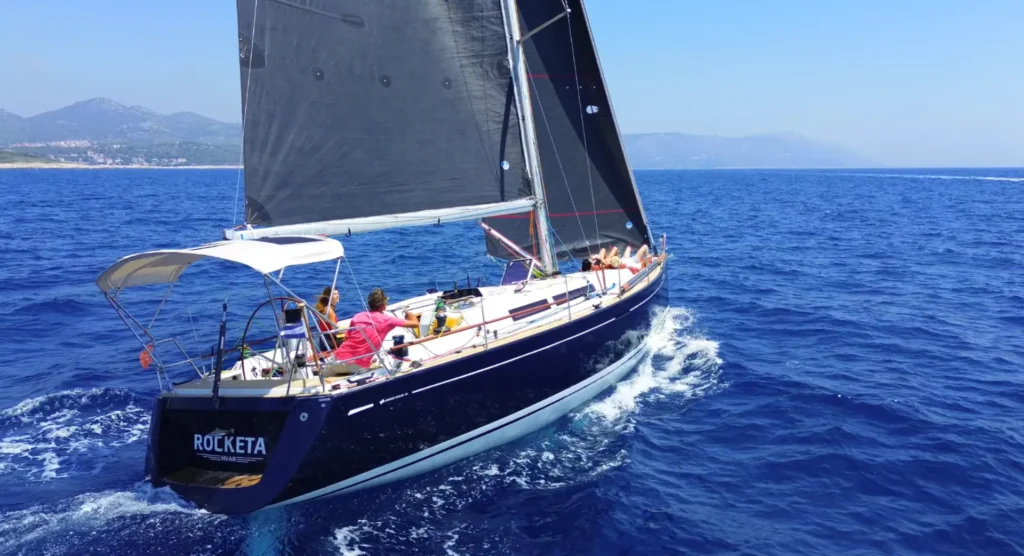
Pros of sailing in Croatia
1. Access to places you cannot reach by land
Many of Croatia’s most impressive locations are only accessible by boat. Hidden beaches, secluded bays and small islands are often unreachable by car or public transport. Sailing allows you to explore these areas at your own pace.
Examples include:
- remote coves in the Vis archipelago
- lagoons such as Budikovac
- smaller islands around Hvar and the Pakleni archipelago
This level of access is one of the main reasons why sailing is considered a premium way to explore the region.
2. Flexibility and freedom
Unlike fixed itineraries, sailing offers a high degree of flexibility. Routes can be adjusted based on weather conditions, preferences and timing. This allows for a more personalized experience compared to organized group tours or land-based travel.
You can:
- choose when and where to stop
- spend more time in locations you enjoy
- avoid crowded areas
This flexibility is particularly valuable during peak season.
3. Combination of transport and experience
Sailing combines transportation with leisure. Instead of simply moving from one destination to another, the journey itself becomes part of the experience.
A route such as Hvar to Vis or Hvar to Korčula is not just a transfer, but an opportunity to:
- swim in open sea
- explore intermediate islands
- enjoy panoramic views of the coastline
This is a significant advantage over ferries or speedboat transfers.
4. High-quality natural environment
The Adriatic Sea is known for its exceptional water clarity and relatively low pollution levels. This makes it ideal for swimming, snorkeling and relaxation.
Many sailing routes pass through areas of preserved nature, including:
- marine parks
- protected bays
- forested islands such as Mljet
For travelers seeking a nature-oriented experience, sailing provides direct access to these environments.
5. Privacy and comfort (private sailing)
Private sailing experiences offer a high level of comfort and exclusivity. Unlike group tours, they allow for a quieter and more controlled environment.
Benefits include:
- no crowds
- personalized service
- relaxed pace
- greater overall comfort
This is particularly appealing for couples, families and small groups.
Cons of sailing in Croatia
1. Cost compared to standard travel
Sailing is generally more expensive than traditional travel options such as ferries or organized bus tours. Private sailing experiences, in particular, represent a higher investment.
Costs can include:
- boat rental or tour price
- skipper services
- fuel
- marina or anchoring fees (for multi-day trips)
However, when viewed as a combined transport and experience, the value becomes more balanced.
2. Weather dependency
Although Croatia has relatively stable summer weather, sailing is still dependent on sea conditions. Strong winds, such as the Bora or Jugo, can affect routes and timing.
This may result in:
- changes to planned itineraries
- delays or cancellations
- limited access to certain locations
Flexibility is important when planning a sailing trip.
3. Limited time in each destination (day trips)
For shorter sailing trips, time in each location may be limited. This is particularly true for group tours that follow strict schedules.
A private sailing experience helps mitigate this issue by allowing more control over timing and stops.
4. Not ideal for every traveler
Sailing may not be suitable for everyone. Some travelers prefer structured itineraries, fixed accommodations or land-based exploration.
Potential challenges include:
- sensitivity to motion at sea
- preference for urban or cultural activities
- limited comfort with open water environments
Understanding personal preferences is important before choosing this type of experience.
When is sailing in Croatia worth it?
Sailing in Croatia is most worthwhile when:
- you want to explore multiple islands in a limited time
- you value privacy and flexibility
- you are interested in nature, swimming and coastal landscapes
- you want a more premium and immersive experience
It is particularly well suited for:
- couples
- small groups
- travelers seeking a balance between relaxation and exploration
Practical tips for planning a sailing experience
Choose the right type of tour
- Group tours: more affordable, less flexible
- Private tours: higher cost, significantly better experience
The choice depends on budget and expectations.
Start from a strategic location
Hvar is one of the best starting points due to its central position between major islands such as Vis, Brač and Korčula. This allows for efficient routes and access to key destinations.
Consider timing
- May, June and September offer the best balance of weather and crowd levels
- July and August provide peak conditions but higher demand
Booking in advance is recommended during high season.
Plan routes in advance but stay flexible
Having a general itinerary is useful, but flexibility is essential due to weather conditions. A good sailing experience adapts to real-time conditions rather than following a rigid plan.
Final verdict
Sailing in Croatia is worth it for travelers who want more than a standard holiday. It offers access to unique locations, a high level of flexibility and a combination of transport and experience that is difficult to replicate through other means.
While it requires a higher investment and some adaptability, the overall value lies in the quality of the experience. For those interested in exploring the Adriatic in a more immersive and authentic way, sailing remains one of the most effective and rewarding options.